World Food Day: Food Feeds More Than Hunger
Celebrate World Food Day with VARAÉ by exploring the connection between mindful eating, everyday nourishment, and emotional well-being. Discover five simple rituals to nourish your body and mind.
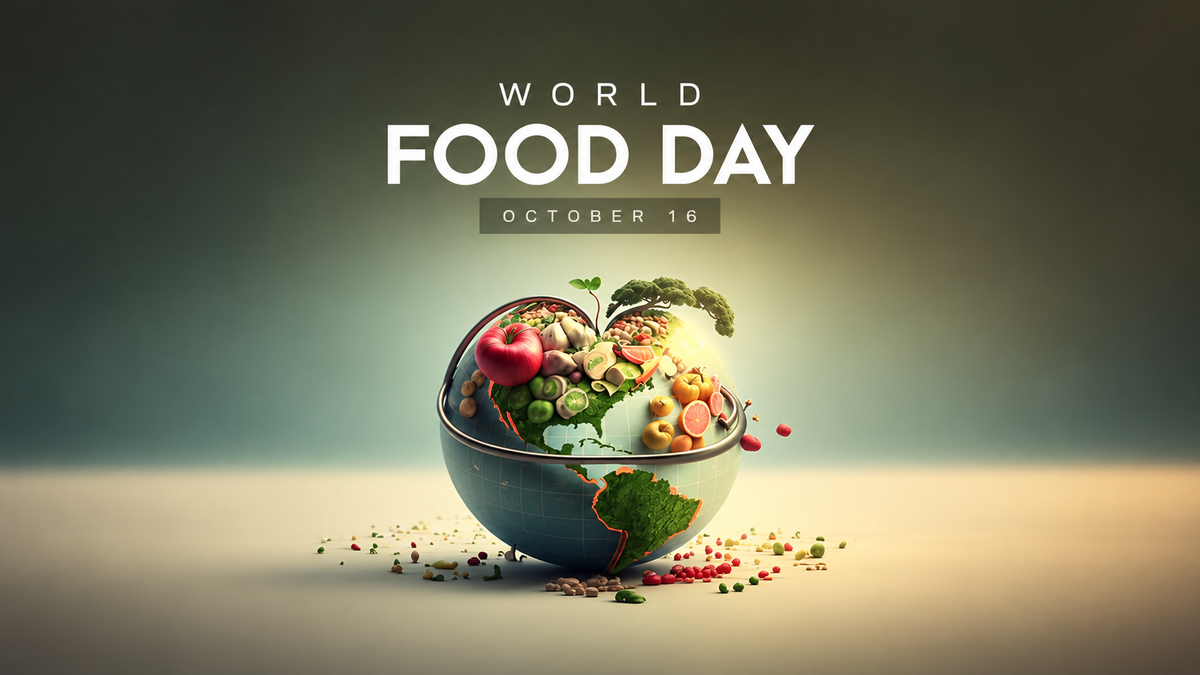
Every year, on October 16, the entire world makes a point to reflect upon food. Those who eat enough of it and those who don’t. The way food is made, distributed, wasted and appreciated.
At VARAÉ, we tend to take a bit of a different view when it comes to food. Food, for us, is not only about physical sustenance. Food is about silently taking care of our mental and emotional well-being and maintaining our composure amid all the commotion. It’s not just about being nourished by a great meal but having your mind cleared of any confusion, nerves soothed and rhythm set for the day.
Let us talk about such food today, on World Food Day.
What you eat today, you become tomorrow
Innovate today. Nourish tomorrow. Say it slowly and it stops sounding like a slogan. It starts sounding like a promise you make to yourself.
Nourishment never happens in a single bite. It's slow and quiet, built one meal at a time. The energy, clarity and calm you'll feel tomorrow are being written on your plate today.
And innovation doesn't have to be dramatic. It can be as small as swapping the 11 am biscuit for a handful of nuts, choosing a spoon of honey over refined sugar, or actually sitting down for breakfast instead of eating it on the run.
Small upgrades today. A steadier, sharper you tomorrow. Your body keeps count of every good choice, even on the days you don't.
Your brain eats first
Food and thoughts are usually unrelated things, however, in reality, they are related pretty closely.
Nothing you do happens without your brain. As the body’s command center, it works nonstop and asks for more fuel and nourishment than almost any other organ, that's why the brain is fueled constantly with the energy from the food you consume.
You’ve likely noticed this fluctuation yourself, whether it’s the 4 pm slump after a heavy lunch or the restless, scattered feeling of a morning running on nothing but coffee.
The matter is neither in eating much nor in eating little. It is in the steady eating: those meals that provide you energy slowly, nourishes you and keep your mind engaged all day long.

What our grandmothers already knew
Before the advent of “brain foods,” Indian homes had their own silent traditions. A spoonful of honey and hot water in the morning. Soaked almonds prior to going to school. Ghee spread on hot rotis. Milk mixed with haldi in the evening. A sprinkling of jeera, ajwain or fennel seeds after meals.
All of these were not labeled as wellness. These were simply part of how a household looked after its people.
Honey plays an important role in this narrative. From ancient times till date, Ayurveda has acknowledged the virtues of honey as a natural, soothing energy source, as well as an excellent carrier that enhances the efficacy of other herbs. Mother Nature spent millions of years developing it, and bees continue to produce it in the same manner.
World Food Day reminds us that we have many solutions to our problems lying around in our kitchens.

It's not just what you eat, but how
We all are in the habit of eating our meals very quickly. While sitting at our desks, when we are stuck in traffic, scrolling through our phones.
It makes a huge impact than what we realize. In stressed conditions, our bodies go into shallow breaths and remain in alert mode always. Whatever food we eat in such states does not feel nourishing even though it is.
With just some simple steps, one can change this scenario. Deep breathing before the meal, smelling the food, chewing it properly and staying away from the phone for at least ten minutes. This sends a message to our body that now is the time to relax and digest.
Five small rituals to try this World Food Day
-
Start slow. Before your first coffee, have a glass of warm water. Add a little honey and lemon if you like.
-
Eat one meal without a screen. Just one. Notice how different it feels.
-
Breathe before you bite. Three slow breaths before a meal help your body shift out of rush mode.
-
Bring back one family ritual. The haldi doodh, the soaked almonds, the after-meal saunf. Pick one of your family swore by and make it yours again.
-
Cook something from scratch. Even something simple. Knowing what goes into your food is the first step to choosing it well.
Beyond our own plates
World Food Day, first and foremost, is about those that lack sufficient nourishment. From the FAO, approximately 733 million people were affected by hunger in 2024, which is equivalent to one in every 11 people on earth.
Wellness should not be inward-looking. Gratitude for every single meal is also part of good nutrition. And minimizing wastage by purchasing what you need, eating what you prepare, and distributing the surplus, along with supporting local farms and agriculture in general.
If you can afford it, donate some meals this week to your neighbour, local food pantry, or anyone else who needs food more than you do.
Nourish the whole you
Food is the oldest form of caregiving in our lives. It nourishes the body, warms the soul, and brings everyone to the same table.
On this day of World Food Day, we call on you to slow down your eating, deepen your breathing and reflect upon how nourishment goes beyond just the food on the plate.
References website
 In this post
Ayurvedic Nasal Inhaler
VARAÉ ANCHOR
Made to reduce anxiety in a few slow breaths.
Covered by our 7-day promise
The VARAÉ range
Small rituals for calmer days
 Available now
Ayurvedic Nasal Inhaler
VARAÉ ANCHOR
Made to reduce anxiety in a few slow breaths.
 Launching soon
VARAÉ ASTÉR
Launching soon
 Launching soon
VARAÉ FOCUS
Launching soon